
Your swimmer reads you from across the pool. You run the same mind-body loop they do, and stress and calm both pass between you. A long breath's worth of protocol for the stands and the car.

Calm is as contagious as stress.
You are in the stands. Your swimmer is behind the blocks, two heats out.
Your leg is bouncing. You have checked the heat sheet four times. Your hands are clasped so tight your knuckles have gone pale, and you are holding your breath without noticing.
Then your swimmer looks up into the stands, finds you, and holds the look for a second.
What did they see?
Swimmers learn to read the people they look to most, and a parent is high on that list. Long before they can put it into words, a lot of kids can tell from across a pool deck whether the person who matters most to them is relaxed or wound tight.
There is a name for what happens when a parent's emotions get tangled up with their child's: emotional enmeshment. Their nerves become your nerves. Their bad swim becomes your bad day. Your state starts to track their results, and it shows, through your face, your posture and your voice. Now your swimmer is carrying two sets of emotions behind the blocks: theirs, and yours. It works the other way too. Stress travels between you. So does calm.
That is not a reason to feel guilty. It is the most useful leverage you have on a meet day.
This month your swimmer is learning the mind-body loop. A challenge shows up. Their thinking reacts. Thinking creates an emotion. The emotion changes their body: heart rate, breathing, how tight they are. The body changes what they do, and what they do becomes their performance. Then it loops again.
Here is the part that is yours: you run the same loop.
Your swimmer has a rough first 50, and your loop starts. Oh no. Not again. Worry. Heart up, jaw tight, shoulders climbing. And then your actions: the face you make, the way you sit, the words that come out at the end of the race. Your performance, as a parent, is whatever your swimmer sees and hears.
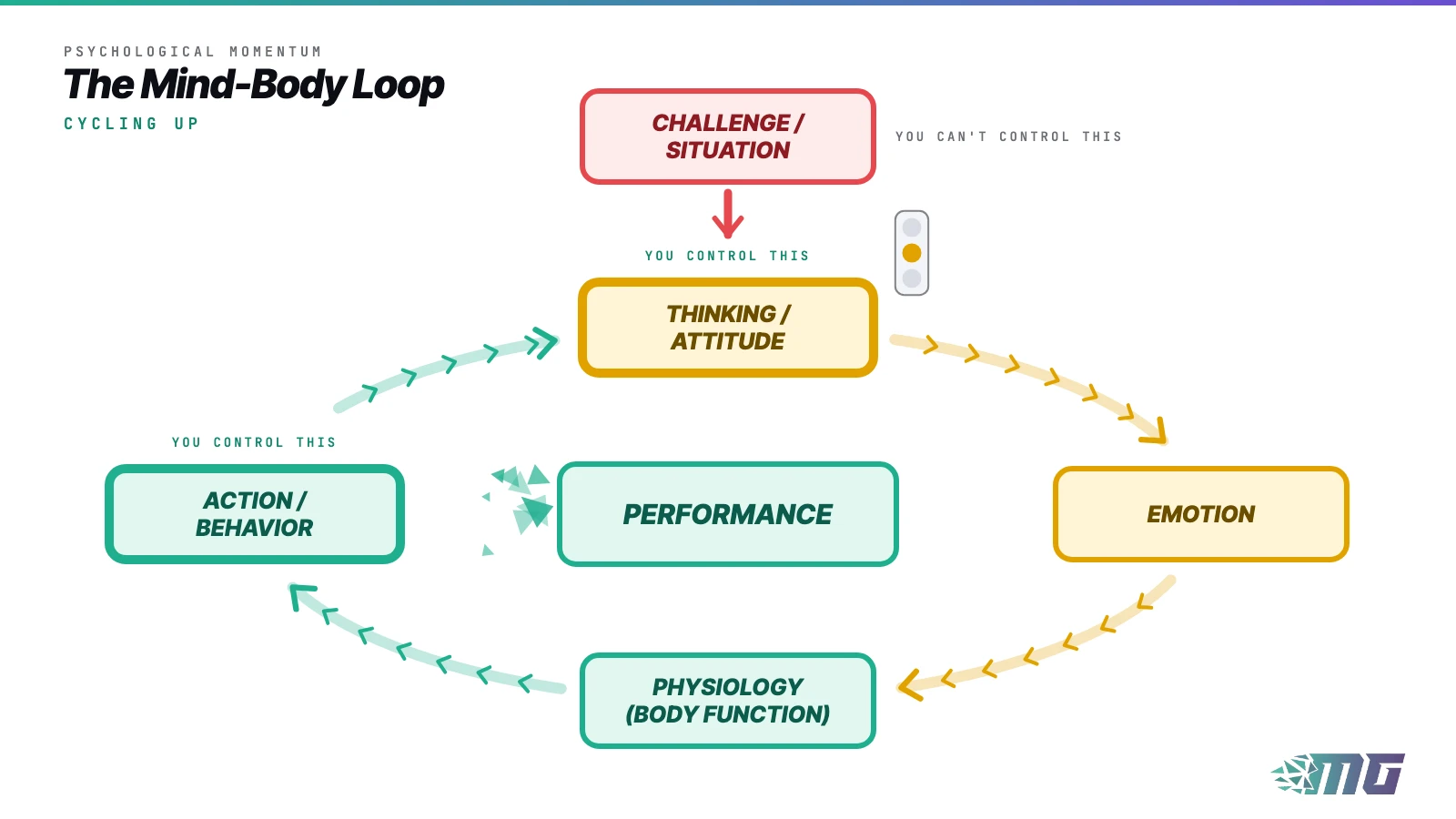
And what your swimmer sees becomes part of their next challenge. Two loops, linked. When one spins down, it can pull the other with it.
None of this means you are doing it wrong. Watching your child do something hard, in public, with a clock on it, is stressful. Your brain is doing exactly what a parent's brain is built to do: register that your kid is struggling and get ready to help.
The trouble is that in the stands, and often in the car, there is nothing to do with all that readiness. So it leaks out: through a face, a sigh, a question asked a little too fast.
You do not have to stop feeling it. You get to choose what you do with it.
This is from the Performance Parent Playbook. It takes about as long as a long breath, and you can do it in the stands without anyone noticing.
1 · Drop anchor. The moment you feel it hit you, their race, their face, their storm, breathe before you do anything else. A long breath out first, then in. Let your breath be your first word, not your reaction.
2 · Catch. Name what you are feeling, and own it. My child is struggling and I have absorbed that. My brain is doing its job. This is not failure.
3 · Release. On the next breath out, let it go. That's theirs. This is mine. They are the competitor. I am here to anchor, not to sail through their storm.
That is it. Not calm on command, which is not how feelings work. Just a breath, a name and a release, as many times as the day needs.
Once you are anchored, there is one more filter before anything comes out of your mouth. It is also from the Playbook, and it is three questions:
Speak only when all three answers are yes.
Most of what a parent wants to say on a meet day fails one of them. The split, the stroke, the turn they missed: maybe it needs saying, but probably by their coach. The thing that does need saying from you might well be true, but not in the hallway two minutes after the race. And in the car straight after a hard swim, the honest answer to the third question is almost always no.
That is not silence as a punishment. It is space. Saying less, and choosing when, is how your swimmer learns that what you do say is worth hearing.
Your swimmer probably will not hear anything you say from the stands. They will see you. So here is what to aim for, in things you can actually do:
You do not have to fake anything. When you run Drop, Anchor, Catch & Release, the calm you are showing is real, and real is the version that carries.
Last month was about the car ride after a hard race: get curious first, validate the hard thing, then ask what they need. This month adds the step before all of that.
Anchor yourself first. Before you start the engine, before the first word, one breath out. If your loop is still spinning, theirs will feel it, whatever words you choose. Then run Need Me Now before you say anything about the race.
The Drop, Anchor, Catch & Release card is a pocket card for meet days. One side has the three steps with the lines to say to yourself. The other has the three Need Me Now questions, plus a short meet-day checklist: what calm looks like in the stands, and the one breath before the car. Keep it in your bag, next to the heat sheet.
Calm is as contagious as stress. And you are the one they are looking at.
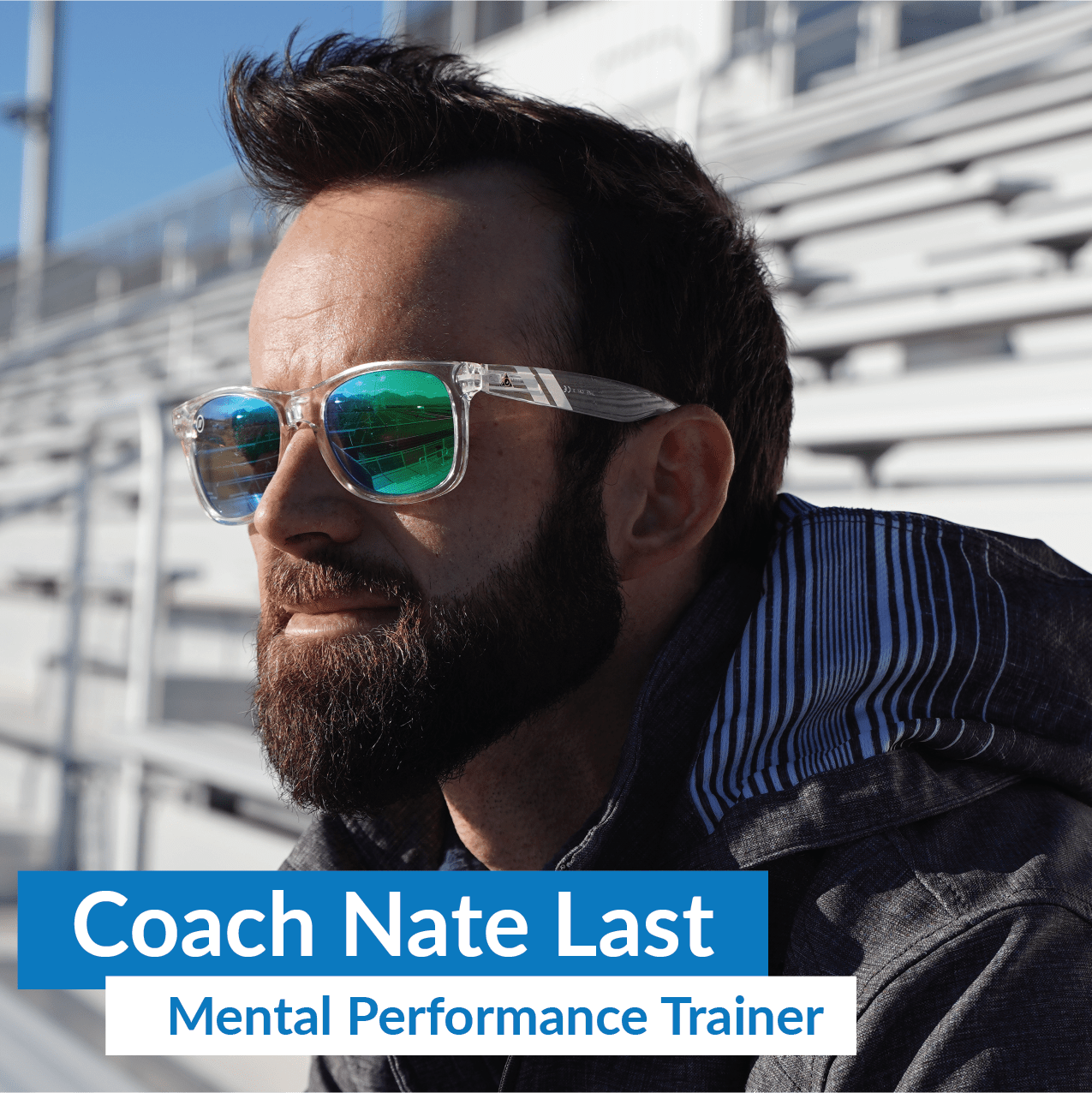
Nate is Utah Swimming’s Official Mental Performance Partner. He works with age-group and elite athletes on the part of the sport nobody schedules — confidence, composure, focus, and what happens in your head behind the blocks. Everything here is free to Utah Swimming families and coaches.

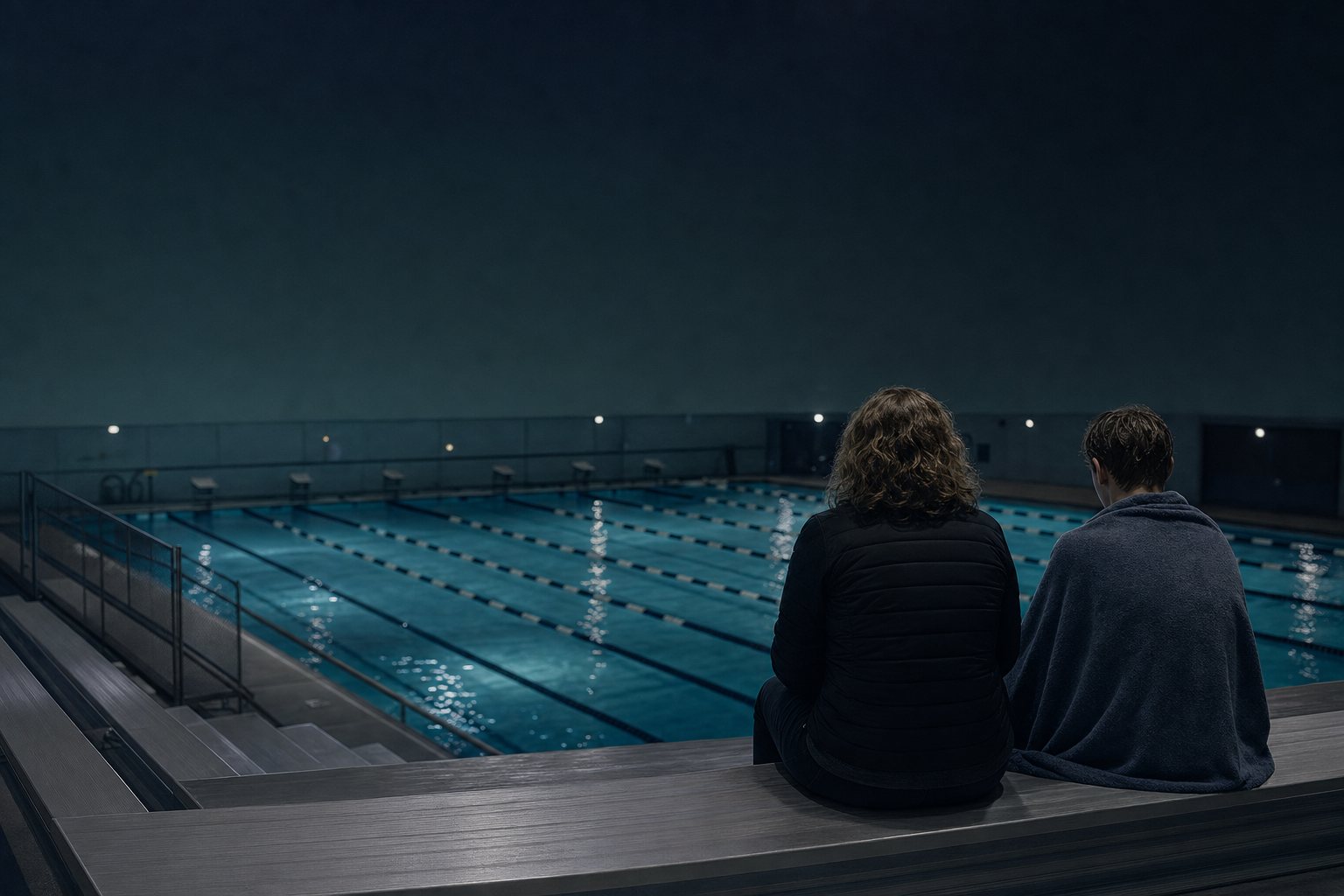

One mental-performance tool for athletes, parents, and coaches — every month in the Utah Swimming newsletter.
Mental Grit provides mental performance training, not mental health care. When a need is clinical, we connect families with licensed professionals.
Mental Grit Consulting is an independent organization and the official mental performance partner of Utah Swimming.